

Most small business owners already know that AI can save time, automate work, and improve productivity. But with hundreds of AI tools launching every year, many entrepreneurs still struggle to figure out which tools actually deliver real business value. In this guide, you’ll discover the best AI tools for small business owners 2026, how they compare, and which ones are worth using for marketing, automation, customer support, and growth.
Key Takeaways
- AI automation tools help small business owners reduce repetitive tasks, improve productivity, and scale operations more efficiently.
- ChatGPT, Canva AI, HubSpot AI, and Zapier AI are among the most popular AI tools for small businesses in 2026.
- AI-powered workflows improve customer experiences across marketing, sales, communication, and support operations.
- Free and low-cost AI tools allow startups and solopreneurs to compete more effectively with larger businesses.
- Human oversight remains essential because AI-generated outputs can contain inaccuracies or context-related errors.
- AI productivity systems work best when automation aligns with specific business goals and operational priorities.
- Small business AI adoption continues growing rapidly as tools become easier and more affordable to use.
What Are AI Tools for Small Business Owners?
AI tools for small businesses are computer programs that utilize smart technology to automate tasks, thereby accelerating business operations and fostering growth.
These tools can efficiently execute even tedious and repetitive tasks. For instance, AI can draft promotional emails for products, answer customer inquiries, generate social media posts, and independently organize workflows—thereby eliminating the need for a large team within the business.
Furthermore, AI facilitates the easier management of marketing, customer interactions, customer service, and daily operations. This saves time and enables the business to perform more effectively across various domains.
According to a 2025 Thryv survey, small business AI adoption increased from 39% in 2024 to 55% in 2025, representing a 41% jump in one year — Source: Thryv, 2025.
In addition, many small businesses now use AI for:
- Content creation
- Customer support
- Marketing automation
- Sales outreach
- Accounting assistance
- Workflow management
You may also like this article :- Best AI Tool for Writing Emails at Work
Why Are Small Businesses Investing in AI Tools in 2026?
AI tools are highly beneficial for small businesses, as they simplify tasks and enable small teams to outperform larger companies.
First and foremost, as costs continue to rise, business owners need to accomplish more with fewer employees. For instance, many sole proprietorships utilize AI assistants—rather than paying other people—to handle emails, create content, and send automated follow-up messages.
Furthermore, small businesses leverage AI to avoid repetitive tasks, enhance customer satisfaction, and compete more effectively against larger corporations. This is particularly crucial in highly competitive sectors such as online retail, local services, and digital advertising.
According to OECD data, AI adoption among businesses increased from 5.6% in 2020 to 14% in 2024 across OECD countries — Source: OECD, 2025.
At the same time, a 2025 SMB survey found that 58% of AI users saved more than 20 hours per month using AI automation tools — Source: Capsule, 2026.
You may also like this article :- Best Free AI Tools for Daily Productivity in 2026
What Are the Best AI Tools for Small Businesses Right Now?
The best AI tools for small business owners in 2026 offer a combination of functional autonomy, simple operations, cost-effectiveness, and massive increases in productivity.
ChatGPT for Content, Communication and Summary
ChatGPT is a computer assistant that can help businesses create content, answer questions, generate new ideas, summarize emails, and automate communication workflows.
Typically, small businesses use ChatGPT to write stories for their websites, respond to customers, send sales messages, and brainstorm marketing ideas. For example, a local marketing team could use ChatGPT to quickly generate social media posts, advertisements, and email strategies.
Best Features
- Content writing
- Email drafting
- Brainstorming
- Customer support scripts
- Workflow assistance
- Generate summary
Pros
- Beginner-friendly
- Fast content generation
- Strong conversational responses
- Content tone adaptability
Cons
- Always requires human fact-checking
- Can generate generic outputs
- Provide more and specific information for better result
Pricing
- Free plan available
- Paid plans unlock advanced features & models
Canva AI for Design and Branding
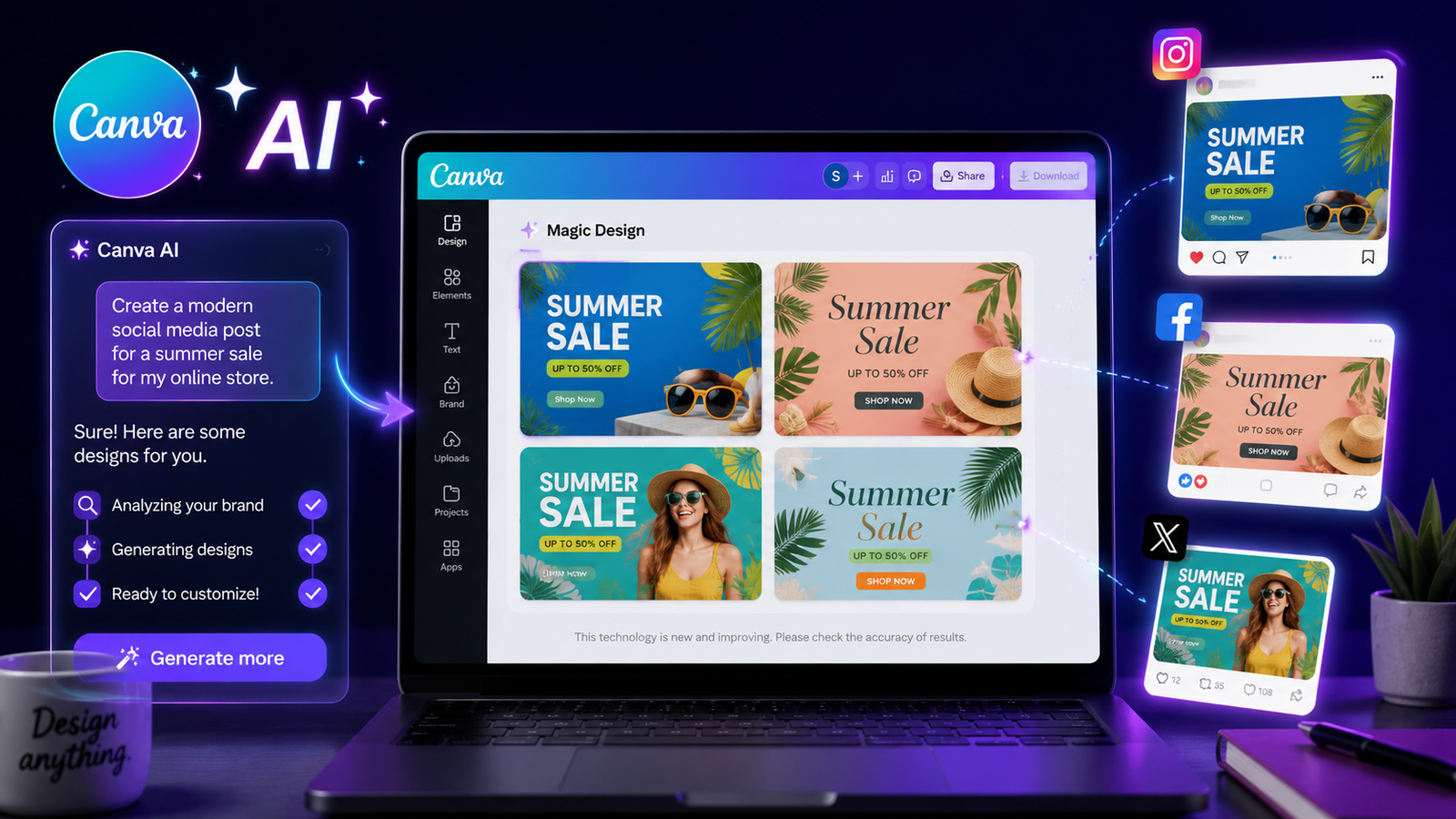
Canva AI is a tool that helps businesses create images, designs, branded graphics and presentations for their businesses.
Even if someone does not know how to design, they can easily create items such as Instagram images, menus, and flyers using Canva AI. For example, a restaurant owner can create these materials without hiring a designer.
Best For
- Local businesses
- Ecommerce brands
- Social media marketing
Pros
- Easy drag-and-drop editor
- AI image generation
- Template library
Cons
- Limited advanced customization in free plan
- Some AI features require paid plans
HubSpot AI for CRM and Marketing
HubSpot AI is a Customer Relationship Management (CRM) platform that offers artificial intelligence-based tools for marketing, automation, and sales.
Furthermore, HubSpot assists companies in monitoring potential customers, managing email marketing, and automating customer communication. For instance, a new startup can automate the processes of sending follow-up emails and segmenting customers using HubSpot workflows.
Best For
- Sales teams
- Service businesses
- Agencies
Pros
- Strong automation features
- CRM integration
- Excellent reporting
Cons
- Advanced plans can become expensive
- Learning curve for beginners
Zapier AI for Workflow Automation
Zapier AI is an automation tool that connects various applications (apps) to automate repetitive business processes.
For example, Zapier can automatically send customer leads from Facebook forms into Google Sheets, Gmail, or Slack without manual work.
Best Features
- Multi-app automation
- No-code workflows
- AI-powered task suggestions
Pros
- Saves operational time
- Works with thousands of apps
Cons
- Complex automations require setup
- Premium workflows cost more
You may also like this article :- Best AI Tools for Office Use In 2026
Comparison Table of the Best AI Business Tools
Tool | Best For | Free Plan | Ease of Use | Automation Features | Best Business Type |
ChatGPT | Content & communication | Yes | Very Easy | Moderate | Agencies & startups |
Gemini | Research & productivity | Yes | Easy | Moderate | Remote teams |
Canva AI | Design & branding | Yes | Very Easy | Low | Local businesses |
HubSpot AI | CRM & marketing | Limited | Medium | Advanced | Sales teams |
Zapier AI | Workflow automation | Limited | Medium | Very Advanced | Growing businesses |
Notion AI | Documentation & planning | Limited | Easy | Moderate | Freelancers |
QuickBooks AI | Accounting | No | Medium | Advanced | Service businesses |
Shopify Magic | Ecommerce | Included | Easy | Advanced | Online stores |
Grammarly | Communication | Yes | Very Easy | Low | Professionals |
Which AI Tools Are Best for Marketing and Content Creation?
Marketing AI tools help companies create content, automate campaign distribution, and engage more effectively with customers.
For example, ChatGPT and Jasper AI are excellent for writing stories and blog posts. Online retailers often utilize Jasper AI to craft product descriptions and generate advertisements.
Additionally, Canva AI enables companies to easily create images and designs, even if they lack drawing skills. By leveraging these tools, businesses can save a significant amount of money on marketing expenses.
According to SMB report, business owners report saving 30–60 minutes daily using AI for customer messaging and local SEO content creation — Source: SMB Group
You may also like this article :- How to Use AI to Save 10+ Hours Per Week at Work?
What Are the Best AI Automation Tools for Small Businesses?
AI automation tools assist companies in simplifying routine tasks and reducing manual effort.
First and foremost, Zapier AI is considered one of the finest workflow automation software solutions, as it possesses the capability to link a multitude of applications with one another. For example, businesses in the service sector can automate processes related to invoicing, lead management, and maintaining customer communication.
Additionally, Notion AI proves effective in streamlining team workflows and enhancing document management. Solopreneurs typically utilize it to record meeting details, track project progress, and capture new ideas.
According to multiple SMB reports, automation tools that solve daily operational problems tend to deliver the strongest long-term ROI. — Source: SMB Services
Are Free AI Tools Good Enough for Small Business Owners?
In the initial stages of a business, AI tools available for free can prove to be immensely helpful for new startups and solopreneurs.
To begin with, platforms such as ChatGPT Free, Canva Free, Grammarly Free, and Gemini offer a range of critical functionalities without requiring any upfront investment. For example, a freelance consultant can effortlessly handle tasks, such as drafting articles, writing emails, and creating business proposals with the aid of entirely free AI resources.
Furthermore, these free and affordable AI tools enable startups and solopreneurs to implement automation without the need for a massive technology budget. Consequently, adopting AI technology becomes remarkably simple for small businesses.
However, premium plans usually provide:
- Faster performance
- More automation
- Better integrations
- Advanced AI models
- Team collaboration features
You may also like this article :- How Professionals Are Using ChatGPT at Work (Real Examples)
What Are the Risks of Using AI in Small Businesses?
The risks associated with Artificial Intelligence (AI) for small enterprises encompass issues such as erroneous results, privacy concerns, an over-reliance on automation, and increasing complexity in operational workflows.
First and foremost, responses generated by AI may occasionally lack factual accuracy or contain misleading suggestions. For example, a client email drafted using AI might cite incorrect product details or outdated pricing information.
Furthermore, the importance of human oversight remains undiminished, as AI-generated content may harbor errors, exhibit biased perspectives, or demonstrate a lack of contextual understanding. Therefore, companies must ensure they independently verify any sensitive information before releasing or transmitting it.
According to Reddit discussions among SMB owners, many businesses abandon AI tools when workflows become overly complicated or difficult to maintain. — Source: Medium
Common AI Risks
- Data privacy issues
- Generic content quality
- Overdependence on automation
- Scaling software costs
- Integration challenges
You may also like this article :- How AI Is Changing Jobs (And How to Stay Ahead)
How Can Small Businesses Choose the Right AI Tools?
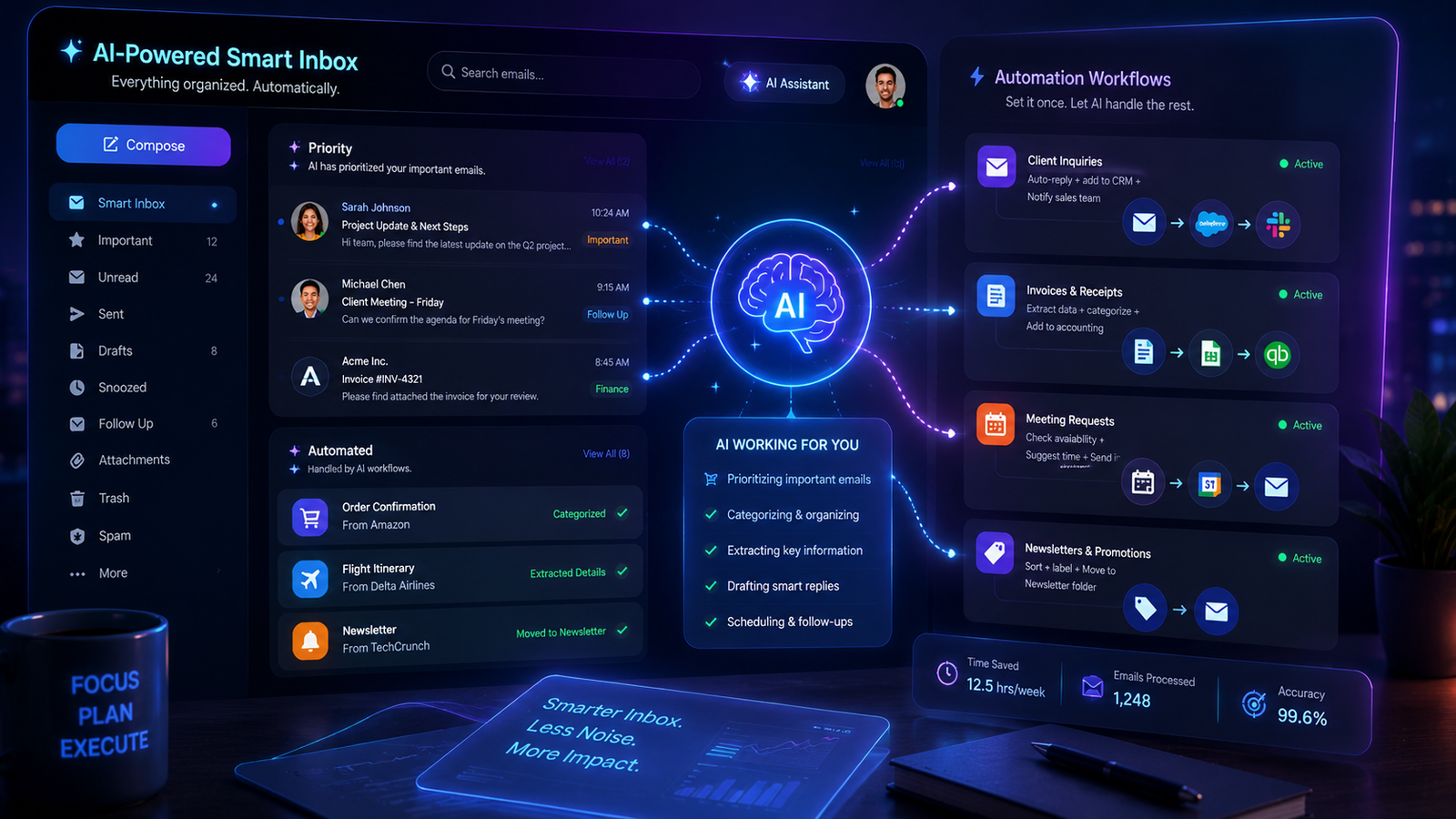
To select the right AI tools, it is essential to first understand where the primary bottlenecks lie in your workflow and what you aim to achieve through automation.
Business operators should begin by identifying the tasks that consume the most time. For example, if a significant amount of time is wasted on communicating with customers, utilizing chatbots or an AI-powered CRM could prove to be the most profitable option.
Furthermore, rather than attempting to build complex AI systems right from the start, begin by working with just one or two tools. This incremental approach prevents confusion and increases the success rate of integrating new tools into your operational workflow.
Practical AI Adoption Strategy
- Define your biggest business bottleneck
- Start with free trials
- Test ROI before upgrading
- Train your team gradually
- Avoid overlapping AI subscriptions
You may also like this article :- AI Tools Every Beginner Should Know in 2026
What Is the Future of AI for Small Business Operations?
The upcoming phase of Artificial Intelligence for small businesses will focus on more intelligent automation, personalized experiences for consumers, and autonomous operational systems.
First and foremost, AI technologies are becoming increasingly deeply integrated with tools for email, CRM, accounting, and communication. For example, in the near future, AI assistants will be able to autonomously execute tasks such as scheduling meetings, contacting clients, and generating reports without any human intervention.
Furthermore, the adoption of voice-controlled AI and multimodal assistants is expected to rise. Through these technologies, business entrepreneurs will be able to seamlessly manage their operations by issuing voice commands or utilizing image-based and conversational interfaces.
According to industry reports, AI adoption among SMBs continues accelerating as tools become cheaper and easier to implement. — Source: JP Morgan Chase
You may also like this article :- What Is AI and How You Can Use It in Daily Life?
Conclusion
In 2026, small business owners should select appropriate AI tools based on their specific objectives such as: operational style, and logistical constraints. While ChatGPT excels in communication and content creation, Canva AI simplifies brand identity management, Zapier AI automates workflows, and HubSpot AI strengthens customer relationship management.
Furthermore, highly successful businesses do not rush toward immediate, complete automation. Instead, they focus on resolving specific operational challenges that allow for immediate improvements in efficiency and customer experience.
By utilizing practical AI tools in a thoughtful and strategic manner, small enterprises can compete more effectively, save time, and achieve rapid growth without incurring additional costs.
Written by: Vishal — AI Researcher & Blogger with 4+ years of experience making artificial intelligence simple, practical, and accessible for everyone.
Reviewed by: Vishal — While writing this article, The process entails verifying every fact, figure, date, and name using reliable and original sources to ensure that they are accurate.
FAQs
1. I'm a small business owner, not a tech person. Can I still use AI tools?
Yes. Most AI tools have been designed specifically with beginners in mind. If you are able to use email, WhatsApp, or Google Search, you can just as easily use platforms like ChatGPT and Canva AI. Start by choosing one tool, and make sure to fully understand it before exploring other options.
2. Which AI tool should I start with if I have a small budget?
Start your AI journey with free tools such as ChatGPT, Canva AI, Gemini, and Grammarly. These tools make tasks like content creation, graphic design, research, and writing accessible without any upfront costs.
3. Will AI replace employees in small businesses?
Absolutely not. AI is extremely efficient at repetitive tasks, such as writing emails, creating content, and organizing information. However, human skills – such as building relationships with customers, driving sales, and making decisions, remain absolutely essential today.
4. Can AI actually help me get more customers?
Yes, but this is an indirect approach. Through AI, you can generate high-quality content, social media posts, emails, and marketing campaigns at a much faster pace. While this enhances the efficiency of your marketing operations, it cannot, however, directly guarantee sales on its own.
5. What's the biggest mistake small business owners make with AI?
Attempting to automate the entire process all at once is not advisable. It is far better to first address a specific challenge, such as content creation or customer communication and subsequently integrate other AI tools incrementally, as needed.
Pingback: Grammarly vs QuillBot Which Is Better?
Clair et pratique. Essayez The Choicer Voicer : . The Choicer Voicer
I agree with the article’s point that small businesses should adopt AI around a specific bottleneck rather than adding tools simply because they are popular. Starting with a small use case, testing the results, and keeping human oversight in place seems much more sustainable than trying to automate everything at once. I’ve taken a similar approach with visual content—for example, I use PicWav ([https://picwav.com/](https://picwav.com/)) when I specifically need to turn existing images into short AI-generated videos for social posts or product content. It solves one clear task without replacing the rest of the creative workflow. The real value of AI for small businesses seems to come from choosing focused tools carefully and using them where they genuinely save time or improve output.
Nice perspective on the topic. You may find Swift-image useful — /. Swift-image
Bookmarking this for later. Creators might like WanVideoGen here: . WanVideoGen
Pingback: Best AI Image Generator Free No Sign Up in 2026