
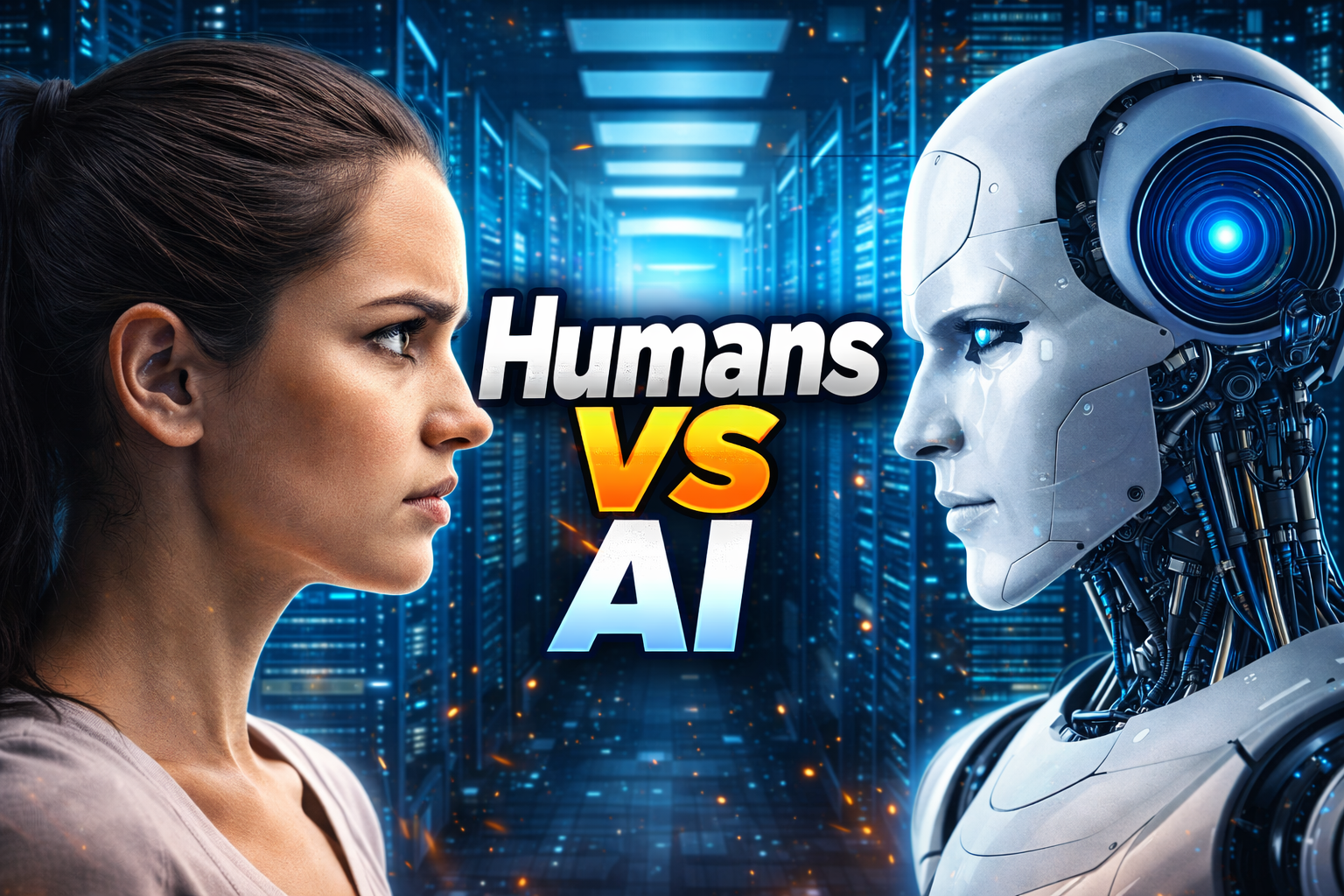
Artificial Intelligence (AI) is far and wide right now. Some people are excited. Some are confused. Some are actually afraid.
And if you’re thinking:
- Is AI only for tech people
- Will AI replace humans?
- How can someone like me actually use AI in daily life?
Then you are not alone.
This article is written for normal people – students, working professionals, content creators, parents, business owners, and curious minds of any age. No specialized background needed. By the end, you’ll understand what AI really is and how you can use it to become a smarter, more productive version of yourself.
Introduction: Why Everyone Is Talking About AI (And Why You Don’t Need to Be scared)
AI didn’t suddenly appear overnight. What changed is that AI has now come accessible to everyone not just masterminds or big companies.
The problem is?
Most content on Internet explains AI in a complicated or fear-based way.
So let’s be clear from the start:
AI is a tool. Not a monster. Not a replacement for humans.
In this article, I won’t scare you or oversell AI. I’ll simply explain
- What AI actually is
- Where you’re formerly using it
- And how you can use it practically in daily life
Chapter 1: What Exactly Is Artificial Intelligence?
At its simplest
Artificial Intelligence is software that can understand patterns, learn from data, and help humans make opinions or complete tasks faster.
That’s it.
AI doesn’t think like humans.
AI doesn’t have feelings, intentions, or consciousness.
Think of AI like this
AI is a vert fast assistant that learns from examples.
It doesn’t “know” things.
It predicts responses grounded on patterns it has seen ahead.
Chapter 2: AI Is Already in Your Life (You Just Didn’t Call It AI)
Now here is something important that most people miss:
You’ve been using AI from so many years.
Examples:
- Your phone camera improving photos automatically
- Google Maps suggesting faster routes
- YouTube or Netflix recommendations
- Gmail spam filters
- Voice assistants like Siri or Google Assistant
None of this felt scary, right?
That’s because AI works best quietly in the background, helping you – not replacing you.
Chapter 3: What AI Can Do for Normal People
AI is useful in four major ways:
1). Time – AI helps you do tasks faster – writing, summarizing, planning, organizing.
2). Think Better – AI helps you clarify ideas, explore options, and understand topics.
3). Learn Faster – AI can explain concepts in simple language, anytime.
4). Create Smarter – AI supports creativity – it doesn’t replace it.
The key idea is:
AI doesn’t make you lazy. It removes unnecessary or repetitive tasks.
Chapter 4: How Students Can Use AI to Learn Faster (Not Cheat)
AI shouldn’t be used to copy answers.
It should be used to understand concepts.
Students can use AI to:
- Explain difficult topics in simple terms
- Summarize chapters or notes
- Practice questions and explanations
- Learn new skills outside academic curriculum
Used correctly, AI becomes a 24/7 personal instructor – patient and judgment-free.
Chapter 5: How Working Professionals Can Use AI to Be More Productive
AI is extremely useful at work when used properly.
Examples:
- Writing clearer emails
- Structuring reports and documents
- Preparing presentations
- Organizing ideas before meetings
- Learning new tools or skills faster
Important truth is:
AI doesn’t replace professionals.
It replaces repetitive efforts.
Chapter 6: How Content Creators & Creatives Can Use AI Smartly
AI doesn’t kill creativity – bad use of AI does.
Creators can use AI for:
- Brainstorming ideas
- Improving clarity and structure
- Editing and refining content
- Script assistance
- Visual and design Inspiration
The smartest creators use AI as a creative partner, not a shortcut.
Chapter 7: How Normal People Can Use AI in Daily Personal Life
This is where AI becomes truly important.
AI can help with:
- Planning routines and habits
- Making better opinions/decisions
- Travel planning
- Budgeting ideas
- Learning hobbies
- Personal productivity
- Explaining things to kids
Think of AI as:
A thinking personal assistant that helps you to organize your life.
Chapter 8: What AI Cannot Do (And Why Humans Still Matter)
Let’s be honest.
AI cannot:
- Feel Emotions
- Understand human feelings/values
- Make moral opinions
- Replace empathy
- Replace experience
AI is strong at information.
Humans are strong at wisdom.
This balance matters.
Chapter 9: Common Myths About AI (And the Truth Behind Them)
Myth: AI will take over every job
Truth: AI will reshape the way we work
Myth: AI encourages laziness
Truth: AI streamlines effort
Myth: AI knows everything
Truth: AI can make mistakes
Myth: AI is only for the exceptionally bright
Truth: AI is accessible for curious people
Chapter 10: How to Start Using AI from Today (Beginner-Friendly steps)
You Don’t need:
- Coding skills
- Technical background
- Expensive tools
You do need:
- Curiosity
- Clear questions
- Ethical thinking
Start small:
Ask AI to explain something
Ask for ideas
Ask for summaries
Seek planning assistance
- Request to create something
Learning to communicate effectively with AI is the key skill.
Final Thoughts: AI Is Not the Future - It’s the Present
AI is not here to replace you.
It’s here to amplify you.
If you can:
- Ask better questions
- Think critically
- Learn continuously
Then AI becomes your advantage.
Age doesn’t matter.
Background doesn’t matter.
What matters is mindset.
And if you’ve read this far, you formerly have the right one.
What’s Next?
This article is just the beginning.
In upcoming articles, we’ll explore:
- Practical AI tools
- Real-life use cases
- Beginner-friendly AI guides
- Ethical and smart AI usage
No fear. No hype.
Just clarity.
FAQs
1. What is Artificial Intelligence (AI) in simple words?
Artificial Intelligence (AI) is software that helps machines understand information, learn from examples, and help humans in completing tasks. It doesn’t suppose like a human. rather, it works by recognizing patterns and giving helpful responses based on data.
2. Can normal people use AI without technical knowledge?
Yes, absolutely. You don’t need coding or specialized skills to use AI. numerous AI tools are designed for normal people and work just like chatting apps or simple software. However, you can use AI If you can use a smartphone or a computer.
3. How AI can help you in daily life?
AI can help with day-to-day tasks like planning schedules, learning new skills, writing emails, organizing ideas, making trip plans, improving productivity, and understanding complex topics in simple language. It’s designed to save time and reduce mental efforts.
4. Is using AI safe for students and working professionals?
Yes, AI is safe when used responsibly. scholars should use AI to understand complex topics or concepts, not to copy answers. Working professionals can use AI to enhance efficiency and clarity. The key is to use AI as a support tool, not as a replacement for thinking.
5. Will AI replace human jobs in the future?
AI will not replace humans fully, but it’ll change how numerous jobs are done. People who learn how to use AI will have an advantage. AI replaces repetitive tasks, while humans remain important for creativity, decision-making, and emotional understanding.
Pingback: Common AI Myths That Are Completely Wrong -
Pingback: How to Use AI to Save 10+ Hours Per Week at Work?