
Many people use AI tools to find answers, summarize notes, or learn new things quickly. However, not everyone realizes just how profoundly AI is transforming the ways in which we learn, think, and acquire knowledge. In this guide, you will discover how AI is reshaping schools and learning methodologies, explore its pros and cons, and learn how you can leverage AI to become a smarter and more effective learner.
Key Takeaways
- Artificial intelligence in education is transforming learning through personalization, automation, and intelligent tutoring systems.
- AI-powered learning platforms help students learn faster by adapting lessons to individual strengths and weaknesses.
- AI tools improve accessibility through instant feedback, language support, and flexible online learning.
- Overreliance on AI can reduce critical thinking and independent problem-solving skills if used improperly.
- Teachers and professionals use AI to automate repetitive tasks and focus more on creativity and human interaction.
- Responsible AI learning combines automation with active thinking, fact-checking, and independent research.
Future classrooms will increasingly combine human teaching with AI-driven personalization.
What Is Artificial Intelligence in Education?
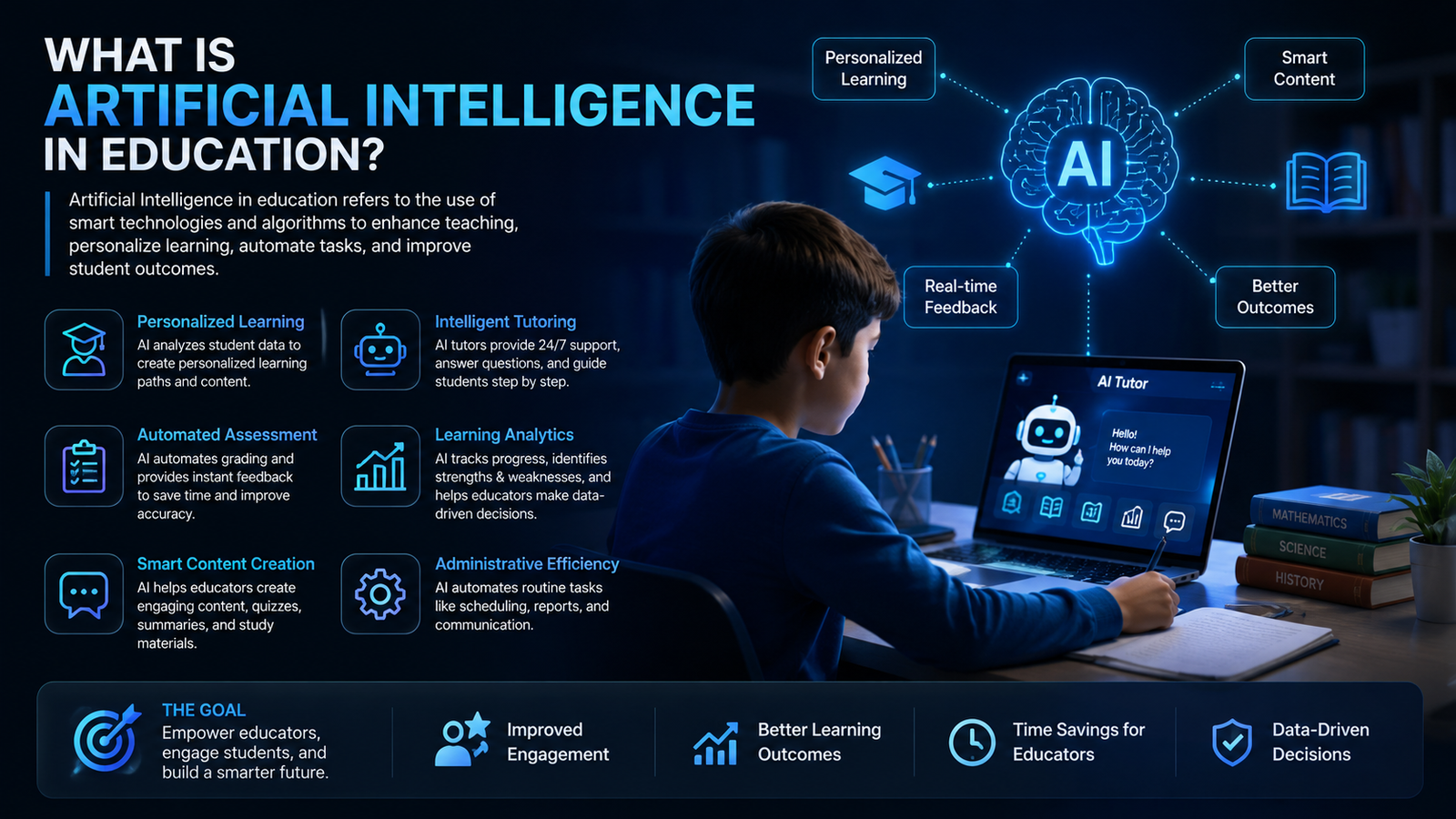
In the context of education, Artificial Intelligence (AI) refers to the use of computers to make learning more engaging and accessible. AI can tailor lessons to suit each individual student, function as a virtual tutor, provide immediate feedback, and suggest activities appropriate for each learner.
For example, AI can monitor a student’s academic performance, identify the specific areas where they are struggling, and modify lessons to help them grasp the material more effectively.
The adoption of AI in education is growing rapidly across the globe. Experts predict that, thanks to this new technology—which is capable of customizing lessons and generating fresh content—the use of AI to personalize the learning experience will become even more widespread between 2015 and 2025. Source – Springer Nature
In the realm of adaptive learning, AI assesses a student’s performance level and subsequently delivers lessons and recommendations that are specifically tailored to meet their individual learning requirements.
You may also like this article :- What Is AI and How You Can Use It in Daily Life?
Why Does AI in Learning Matter Today?
Given the growing trend of online education, AI is of immense importance for learning, and it can be tailored to suit every individual. Students and employees alike seek learning methods that are fast, user-friendly, and accessible at all times.
Nowadays, a great number of people are enrolling in online classes. For example, a report suggests that by 2026, a new AI course will be joined every three seconds, as an increasing number of people seek to acquire digital skills. source – Axios
AI is also beneficial because not everyone learns in the same way. While traditional classrooms may offer a standardized approach for everyone, AI can adapt lessons to align with each individual’s optimal learning style—whether they are quick learners or require additional support.
Furthermore, a 2025 report by Microsoft indicates that students utilize AI to generate ideas, create summaries, and review their work. Educators, too, employ AI to explain complex subjects and to expedite the planning of lessons.
You may also like this article :- Is AI Safe to Use for Work, Study, and Personal Tasks?
How Is AI Changing the Way Students Learn?
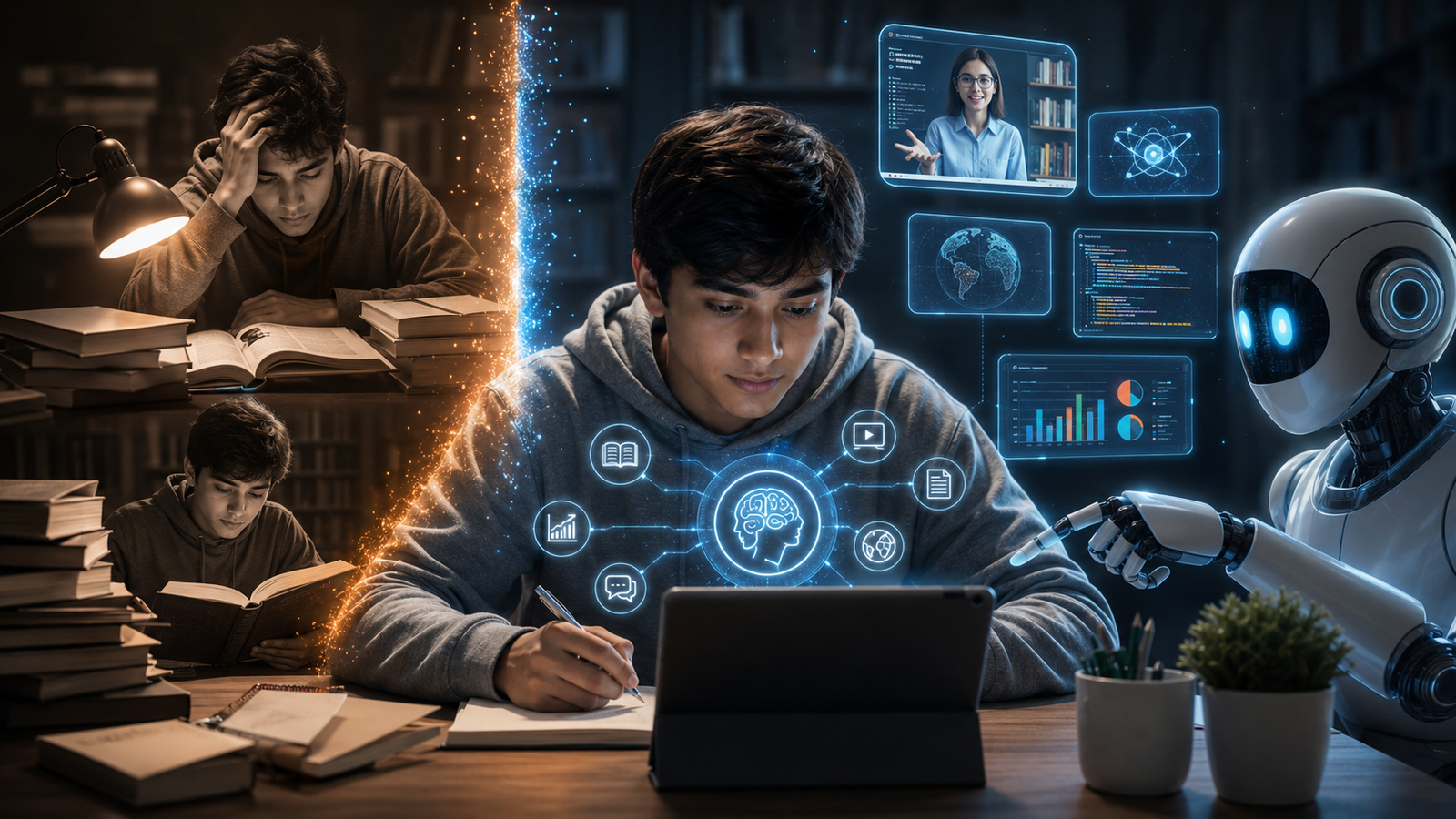
Artificial Intelligence (AI) is transforming the way children learn, making lessons more personalized, engaging, and accessible to everyone. Instead of doing the same thing all the time, students receive assistance tailored to their specific needs.
Personalized Learning Paths
Personalized learning means that AI helps generate customized lessons, quizzes, and recommendations for each individual student. This makes learning more exciting, as children can learn at their own pace.
For example, language apps like Duolingo adjust the difficulty of lessons—making them harder or easier—based on a student’s performance. If a student finds a particular topic challenging, AI tutors can provide additional practice exercises.
According to Science Direct, new AI systems utilize smart computers and language tools to make the learning process more engaging and supportive.
AI Tutors and Virtual Assistants
AI tutors act like virtual assistants, providing answers, feedback, and support to students while they study. Children can ask questions at any time without having to wait, without hesitation and receiving immediate assistance.
Many students use ChatGPT to explain lessons, grasp difficult concepts, or generate practice questions. For coding, AI assistants can also quickly identify and fix errors within computer programs.
According to a report by Microsoft, approximately 37 out of every 100 students use AI tools to generate ideas for their homework, while 33 out of every 100 students use them to summarize information and seek advice.
You may also like this article :- How Students Can Use AI to Study Smarter?
What Are the Biggest Benefits of AI in Education?
Artificial Intelligence (AI) helps students learn faster, makes learning accessible to everyone, personalizes lessons for each individual student, and assists teachers in performing their duties more efficiently.
First, it enables students to quickly translate lessons, access speech assistance, and locate learning resources from wherever they may be.
Second, AI supports teachers by handling tedious tasks such as grading papers and creating lesson plans. This frees up more of the teachers’ time to interact and work directly with their students.
Furthermore, AI makes learning more enjoyable and engaging through instant feedback and interactive activities. When utilized effectively, AI can help students become more active participants and achieve better learning outcomes. source – MDPI
AI in Education: Benefits vs Risks
| Area | Benefits | Risks |
|---|---|---|
| Learning Speed | Faster explanations and feedback | Reduced patience for deep learning |
| Accessibility | Language translation and flexible learning | Digital inequality concerns |
| Creativity | Better brainstorming support | Overdependence on AI-generated ideas |
| Teaching | Automated grading and lesson planning | Privacy and ethical concerns |
| Research | Faster summaries and note-taking | Misinformation risks |
What Are the Risks of Using AI for Learning?
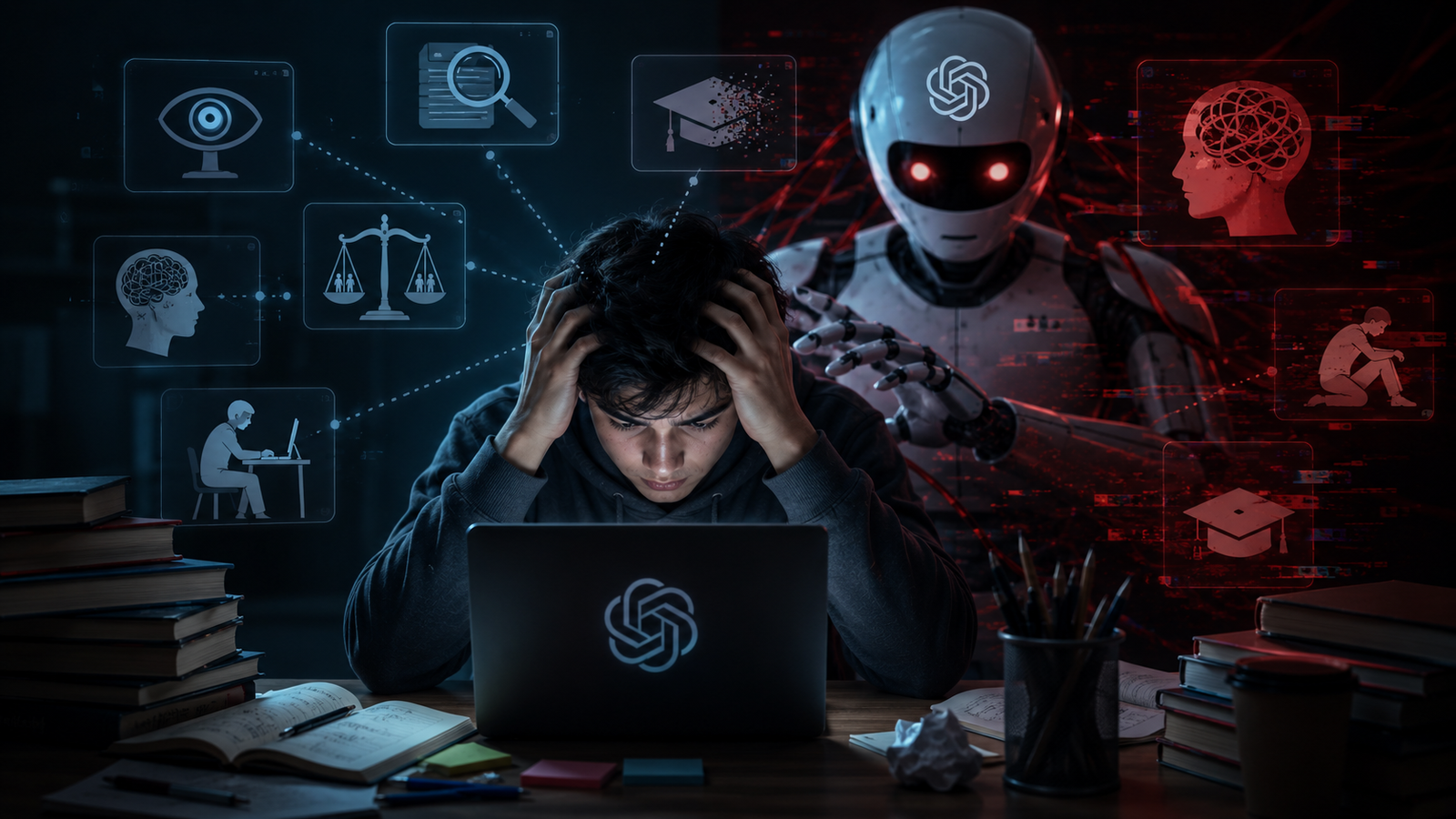
The major challenges associated with using Artificial Intelligence (AI) for learning are that individuals may become overly dependent on it, receive misinformation, cease to engage in critical thinking, and harbor concerns regarding privacy. While AI can facilitate learning, if not utilized judiciously, it risks depriving us of essential critical thinking and reasoning skills.
First, if students consistently rely on AI to provide answers to their questions, they may stop practicing analytical thinking on their own.
Second, AI occasionally generates factual errors or fabricates information; therefore, it is imperative that we verify the accuracy of the information it provides.
Additionally, privacy concerns continue growing in schools. Reports show nearly 70% of parents oppose sharing student data with AI systems because of ethical and privacy concerns. source – The Times of India
Research from Oxford University Press also found that many students believe AI tools make academic work “too easy” and may reduce creativity and independent learning habits. source – The Guardian
The proper application of AI involves utilizing it as a tool to support learning, while simultaneously engaging in active thinking, problem-solving, and independent inquiry.
You may also like this article :- Can AI Replace Tutors? Here’s the Truth
What Are the Best AI Tools for Students and Teachers?
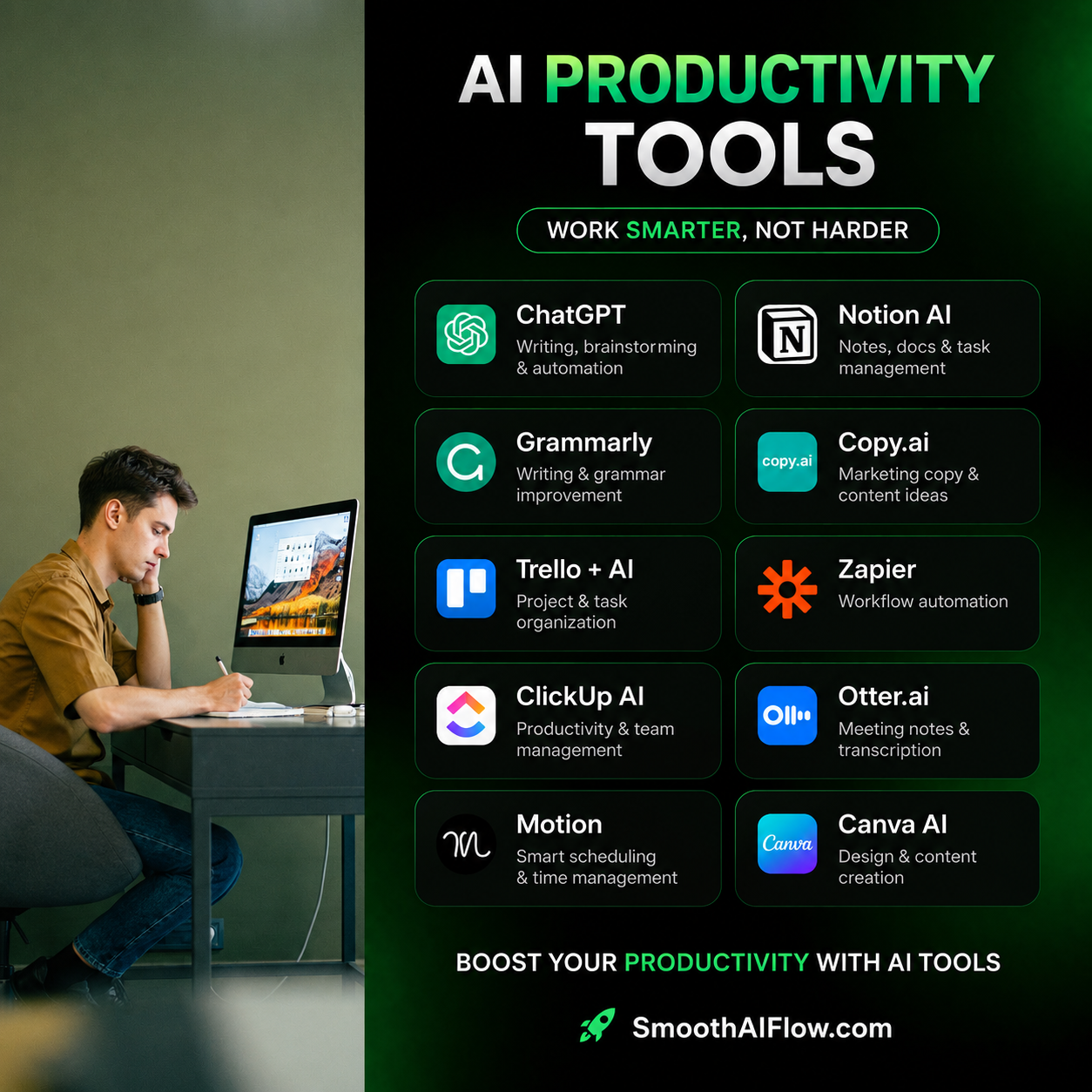
The best AI learning tools help people learn, stay organized, and get more done—without replacing human thinking.
Popular AI education tools include:
- ChatGPT for explanations and brainstorming
- Claude for coding, writing and research
- Grammarly for writing improvement
- Notion AI for note organization
- Khanmigo for AI-assisted tutoring
- NotebookLM for upload documents, videos, pdf or podcasts for interactive conversation
- Gamma for AI based presentations and documents
Students should utilize traditional methods—such as reading, taking notes, and practicing—alongside AI tools.
You may also like this article :- Best AI Tools for Homework, Research & Exams.
What Does the Future of AI-Powered Education Look Like?
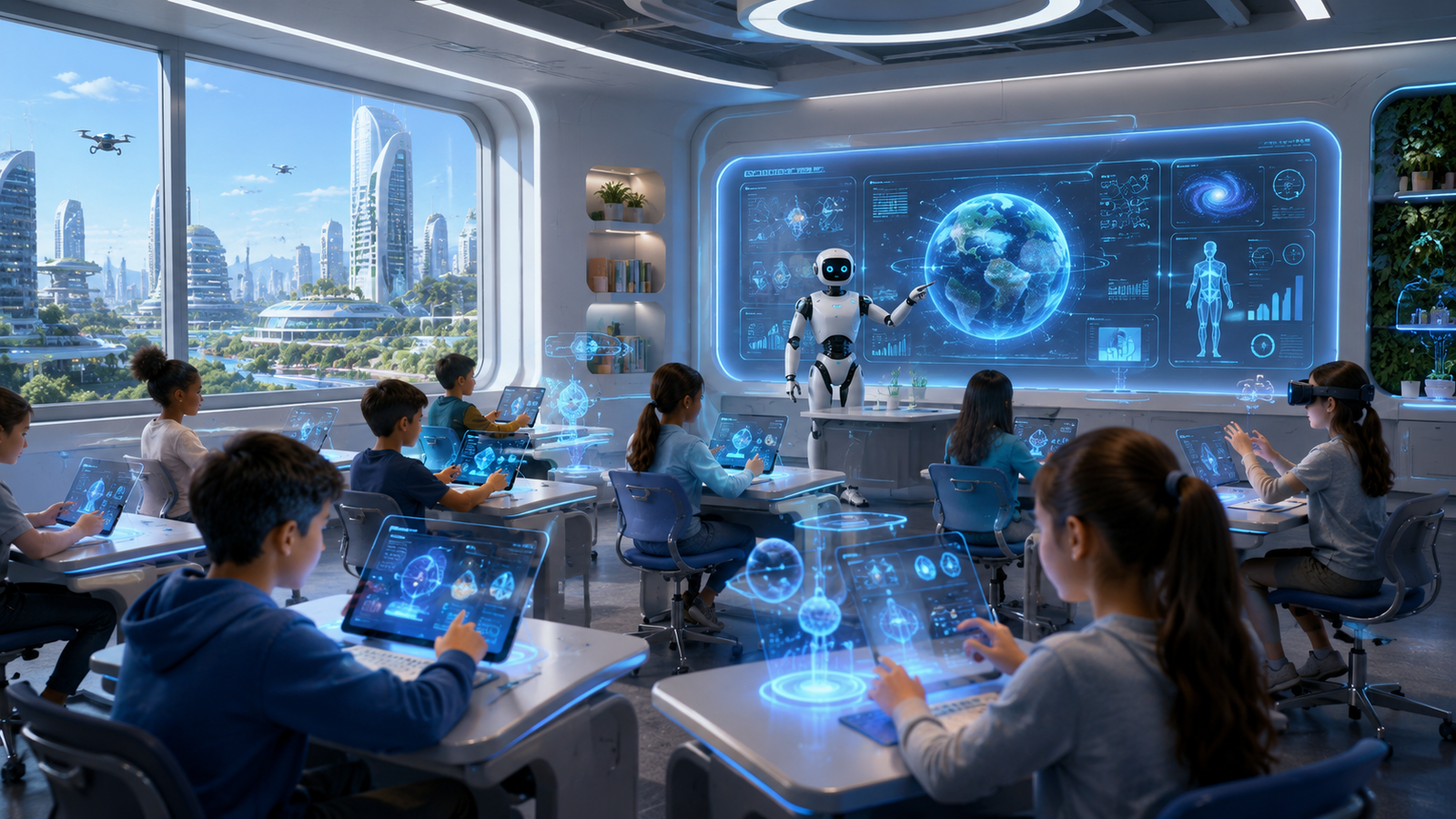
Future education, powered by Artificial Intelligence (AI), will integrate human instruction with AI-driven personalized learning and immersive digital education. While it is unlikely that AI will completely replace teachers, it will undoubtedly reshape the way education is delivered.
First and foremost, AI-based virtual classrooms and intelligent tutoring systems will become increasingly prevalent. Researchers are already developing systems that provide contextual feedback and personalized assistance on a large scale. source – Research Gate
Secondly, in this era of AI, human capabilities will become even more valuable. The importance of critical thinking, communication, creativity, and digital literacy will rise significantly, as repetitive tasks are increasingly handled by automation.
Furthermore, the pace of AI adoption within the education sector is accelerating globally. Reports from Indian campuses indicate that AI is being rapidly integrated into assignments, lesson planning, student support, and career guidance systems. source – The Times of India
Future educational systems will increasingly blend human instruction with AI-driven personalization.
You may also like this article :- How AI Is Changing Jobs (And How to Stay Ahead)
Conclusion
Artificial Intelligence (AI) is transforming the way we learn, making it faster, more personalized, and accessible to everyone. AI tutors, smart lessons that adapt to your specific needs, automated grading, and AI-powered smart classrooms are already a reality. These tools are helping students everywhere learn more effectively.
However, AI also presents certain challenges, such as potentially diminishing critical thinking skills, spreading misinformation, raising concerns regarding the security of personal data, and fostering over-reliance among users. The best approach is not to avoid AI, but rather to learn how to use it carefully and responsibly.
By integrating AI with active learning, independent thinking, and your own creativity, you can enhance your learning experience and prepare yourself for the future of both education and the workforce.
Written by: Vishal — AI Researcher & Blogger with 4+ years of experience making artificial intelligence simple, practical, and accessible for everyone.
Reviewed by: Vishal — While writing this article, The process entails verifying every fact, figure, date, and name using reliable and original sources to ensure that they are accurate.
FAQs
1. Will AI replace teachers completely in the future?
Many people are somewhat apprehensive about the rapid growth of Artificial Intelligence (AI). However, in reality, AI will assist teachers rather than take away their jobs. AI can help explain lessons, create quizzes, or handle tedious tasks, thereby allowing teachers to focus their attention on the students. Nevertheless, AI cannot replace the way teachers attend to student’s emotional needs, encourage them, or connect with them on a personal level. Good teachers understand their student’s emotions—something that AI still struggles to comprehend.
2. Is learning with AI actually making students smarter, or just making things easier?
This can be helpful in two ways, depending on how students utilize it. If students use AI to grasp concepts, formulate insightful questions, and study more efficiently, it can help them improve. However, if students merely copy answers without critical thought, it simply makes things easier without actually aiding their understanding. AI is a powerful tool, but students must still remain curious and work hard to learn effectively.
3. Can students become too dependent on AI tools for homework and studying?
Yes, this is indeed possible. When students ask AI to solve every question instead of attempting to answer them themselves, they forgo the practice of problem-solving and deep thinking. Therefore, striking the right balance is essential. AI should serve to assist students in learning more effectively, rather than causing them to lose the art of thinking. The best approach is to first attempt to solve problems on your own, and then use AI to refine your work.
4. Which AI tools are actually useful for students without creating confusion?
Most beginners need only a few simple tools rather than ten. For example, ChatGPT can help explain concepts and generate ideas, Grammarly improves your writing, and NotebookLM is excellent for studying from your notes or PDFs. The key is not to use a multitude of tools, but rather to select the right tools according to your specific needs.
5. What skills will become most important if AI keeps changing education like this?
In the future, merely memorizing facts will no longer be as important, as computers can provide you with answers very quickly. The most important skills will be thinking critically, being creative, effectively articulating and sharing ideas, solving problems, and understanding how to utilize computers and the internet. Those who can think for themselves and use computers wisely will outperform those who rely solely on technology.